

AERONOVA NOVA-01 Flight Testing: What Has Been Achieved and What It Means for Investors

AERONOVA NOVA-01 Flight Testing: What Has Been Achieved and What It Means for Investors
In a nutshell: NOVA-01 has completed its first cycle of flight tests, validating the operation of key control systems and collecting data for the development of NOVA-2; meanwhile, the autonomous and commercial flight program remains ongoing.
Introduction
In deep-tech crowdinvesting, it is easy to lose sight of the line between a presentation and reality: renderings and plans mean little if there is no physical aircraft that actually flies. NOVA-01 is exactly that—not a concept, but a functional flying AERONOVA prototype that has been gathering actual flight data for more than a year. This article takes a close look at exactly what it has validated, which claims qualify as verified facts, and what remains a design target or a plan for the future.
What Is NOVA-01?
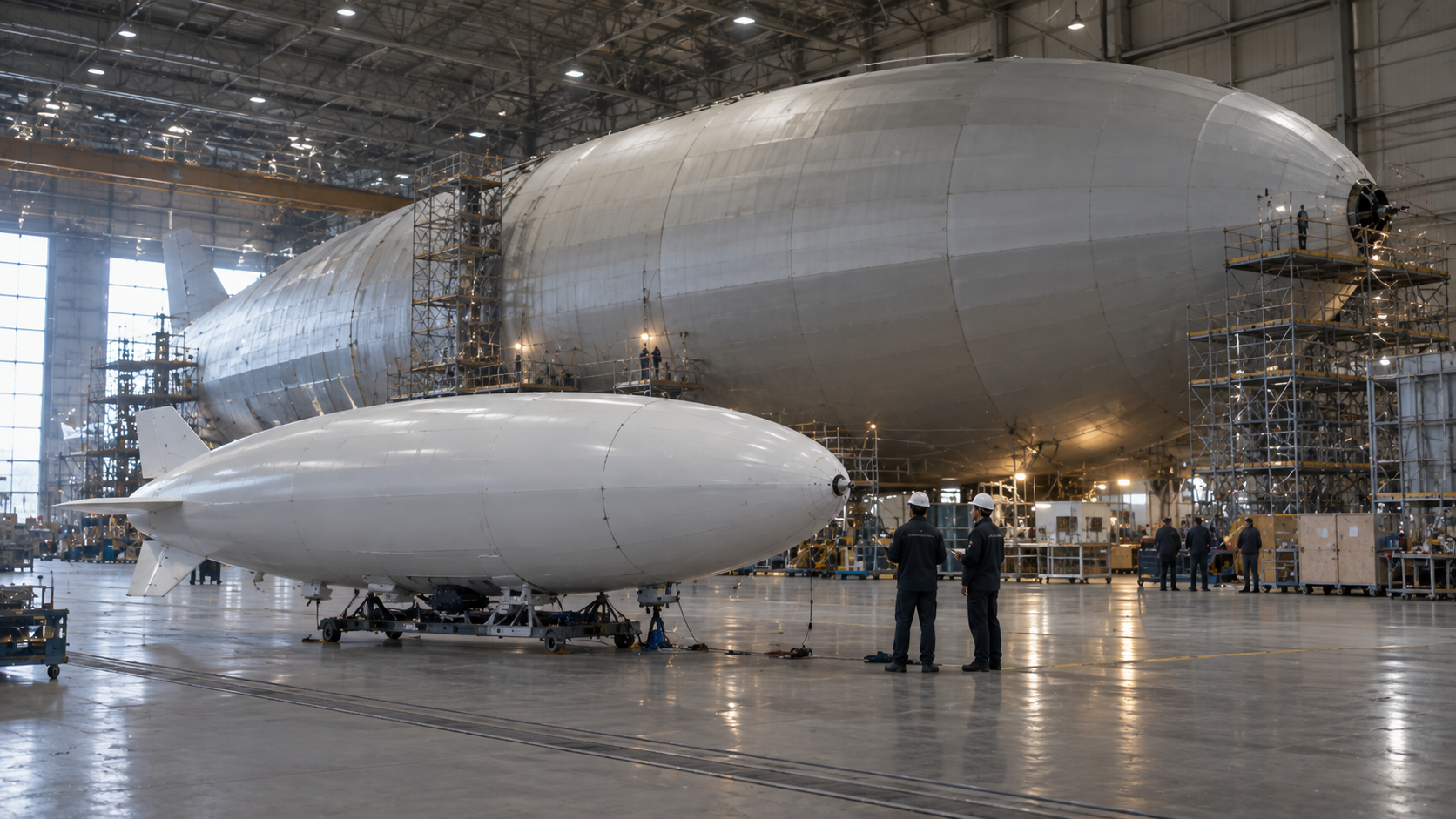
NOVA-01 is AERONOVA's 17 m-long non-rigid unmanned airship, with an envelope volume of 130 m³ and an aircraft mass of about 112 kg. It is the company's first flying prototype and a dynamically scaled replica of NOVA-2. It is used to refine remote control, autopilot, telemetry, mooring, takeoff, and landing—in other words, the full set of systems that are intended to be integrated into the full-scale aircraft.
The propulsion system comprises two 5 kW electric motors mounted on a pivoting beam. Telemetry and observation are provided via 4G connectivity and five cameras offering 360° coverage. The standard stated payload is about 20 kg; later descriptions cite up to 30 kg.
Timeline of Flight Tests
- May 29, 2025 — the first comprehensive flight tests: the two tail-thruster motors, main propulsion motors, thrust-vectoring mechanism, and ballonet valves and blowers were tested; telemetry recording began to train the automated piloting system. No critical issues were identified.
- June 19, 2025 — autopilot and handling tests: NOVA-01 followed commanded motion vectors, executed turns, and corrected its trajectory using only its tail surfaces, without the thruster. The maximum recorded speed was 44 km/h. During the same period, the team reported successful completion of a flight mission: the operator set a direction vector for the aircraft, after which NOVA-01 continued moving and controlling its course independently within the mission parameters.
- July 30, 2025 — low mooring point test: takeoff, landing, attachment and detachment during mooring, and weathercocking around the gondola-mounted point were practiced in manual mode.
- September 2, 2025 — completion of the first test cycle: reliable operation of the onboard controls and remote-piloting functions was validated, along with the link between the dispatch system and the autopilot; data were collected for the NOVA-2 dynamic model.
- October 20, 2025 — recovery after damage to the envelope: the envelope passed a leak-tightness test, the gondola was reassembled, and final assembly of the aircraft for the second series of tests began.
- August 1–2, 2026 — first public flight: NOVA-01 took part in the “VIVA AVIA!” festival in Novosibirsk and headed the event's aeronautics segment.
- September 7, 2026 — current status: the aircraft is assembled and undergoing flight tests; a robotic transport cart has been built for it.
What Exactly the Tests Validated
The program documented the operation of the propulsion units, thrust-vectoring mechanisms, and ballonet valves and blowers; telemetry recording to train the automated piloting system; control using commanded motion vectors; control of the aircraft using only its tail surfaces; remote control and communication between the dispatch system and the onboard autopilot; mooring, release, and weathercocking around a low mooring point; and data collection for the NOVA-2 dynamic model.
What Has Been Measured—and What Remains Only a Design Target
It is worth being extremely precise here—this is exactly where marketing materials tend to lose rigor.
| Metric | Status |
|---|---|
| Length 17 m, envelope volume 130 m³, mass ~112 kg | Measured aircraft parameters |
| Speed 44 km/h | Recorded in real-world tests (19.06.2025) |
| Speed 60–70 km/h | Design target; not validated as a test result |
| Range up to 200 km | Design target; not validated as a test result |
| Loitering time up to 24 hours | Design target; not validated as a test result |
| Operating altitude ~500 m | Design target; not validated as a test result |
| Total flight hours | Not published |
How NOVA-01 Relates to NOVA-2: Why a Small Aircraft Matters in a Project with Big Ambitions
NOVA-01 was created not as a standalone commercial product, but as a dynamically scaled replica of NOVA-2. Data from the smaller aircraft are intended to refine control, mooring, and landing systems and behavior in the air before these solutions are applied to the larger model. This is standard de-risking logic in aerospace deep tech—and precisely what distinguishes a project like this from a presentation with no physical product.
The full-size NOVA-2 envelope—with a volume of 2,000 m³, a length of 43.2 m, and a maximum diameter of 9.6 m—has already been manufactured. On September 1, 2026, it successfully passed pressure testing at an overpressure of about 950 Pa, compared with a normal operating level of approximately 550 Pa. On September 8, 2026, ballonet testing was also completed successfully, with no unacceptable leaks or deviations in the parameters tested. An important caveat must be stated plainly: the complete airship has not yet been assembled. Manufacturing and integration of the gondola, tail assembly, electronics, battery systems, and other components are still in progress.
For context, other developers of modern airships around the world follow a similar approach: LTA Research (Pathfinder 1, with a test program in the San Francisco area), Hybrid Air Vehicles (Airlander 10, for which type certification has begun in the United Kingdom), and Flying Whales (the LCA60T heavy-lift airship). The existence of several independently funded programs does not prove that airships will become a mass-market mode of transport, but it does show that the hypothesis of niche demand is being tested independently by different engineering teams, rather than only within a single project.
Where the Project Stands Financially
The New Generation Airships project is in funding stage 4. It raised $5 million during stage 3; total project funding has exceeded $15.5 million, with support from more than 14,200 people worldwide. The overall funding target is $100 million.
What This Means for Investors
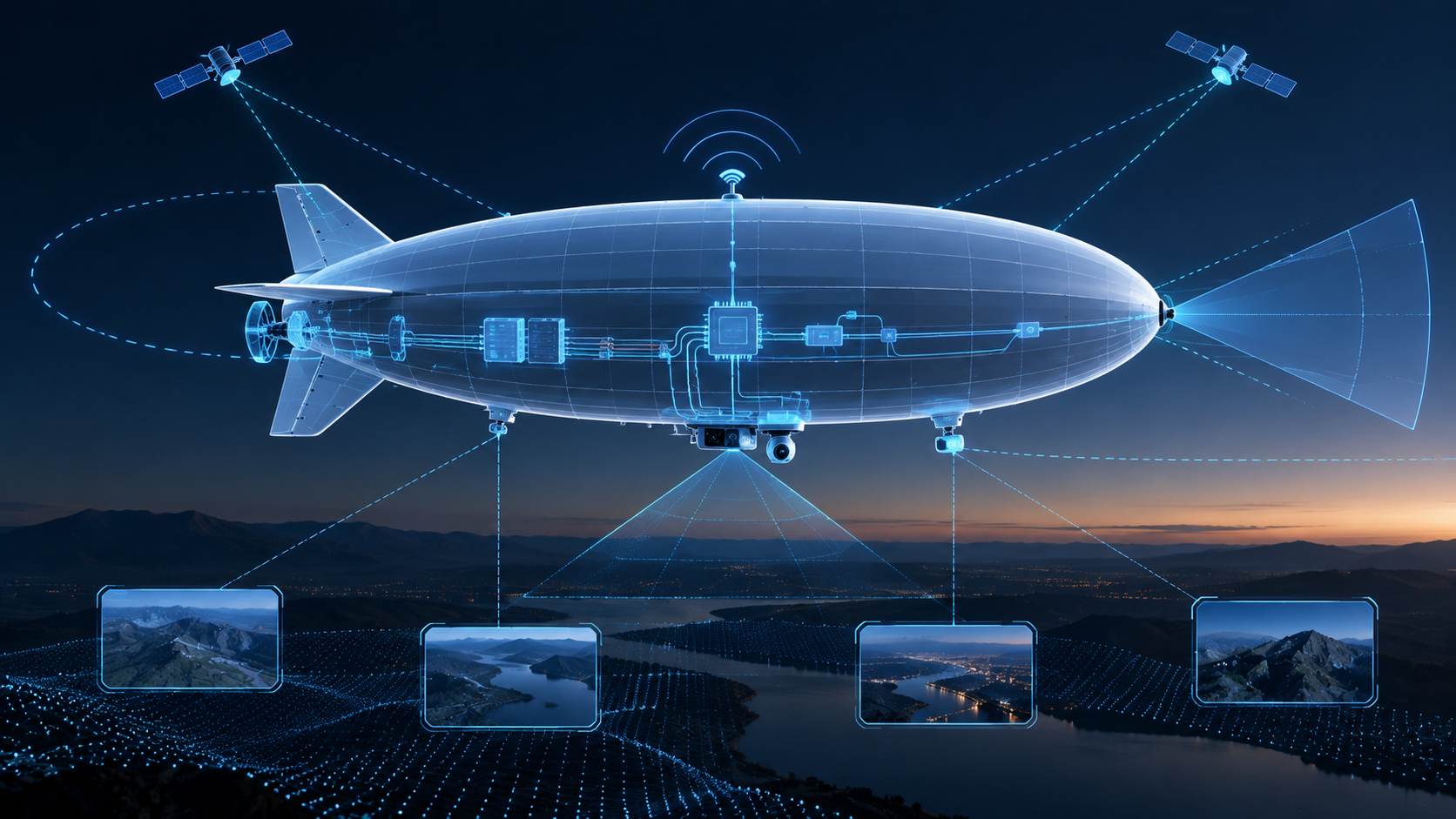
NOVA-01 flight testing gives the project an evidence-based foundation in several critical areas at once: controllability, onboard systems performance, telemetry, autopilot algorithms, and ground mooring operations. This is not abstract progress—the results have already been used as input for the dynamic model of NOVA-2, meaning they directly inform development of the aircraft into which the bulk of the project's investment has gone.
At the same time, it is important to distinguish engineering progress from the financial mechanism. The investment model provides that, once funding is complete and AERONOVA is converted into a joint-stock company, investment stakes will be exchanged for shares; the right to participate in profit distributions is tied to the company's future financial performance. The NOVA-01 flight tests themselves confirm engineering progress, not revenue or dividends: one does not substitute for the other.
Verified / Still Uncertain
✅ Verified:
- NOVA-01 conducted its first comprehensive flight tests on May 29, 2025.
- The first test cycle validated the reliable operation of onboard controls and remote-piloting functions, the link between the dispatch system and the autopilot, and data collection for NOVA-2.
- A speed of 44 km/h was recorded in tests on June 19, 2025.
- The low mooring point and weathercocking were tested.
- Following damage to the envelope in September 2025, the aircraft was repaired and returned to testing.
- NOVA-01 made a public flight at the “VIVA AVIA!” festival on August 1–2, 2026.
- According to the latest status as of September 7, 2026, flight testing is ongoing.
⚠️ Still uncertain:
- Completion of the full autonomous flight program without operator involvement has not been separately confirmed.
- Commercial operation of NOVA-01 and series production have not been confirmed to have taken place.
- The design values for range, loitering time, operating altitude, and a speed of 60–70 km/h have not been validated by the data as final test results.
- The total number of flight hours has not been published.
- The exchange of investment stakes for shares and dividend payments are part of a planned model and depend on the completion of funding, the company's conversion, and its financial performance.
Available to Investors and Partners from South Africa, Vietnam, and India
The New Generation Airships project is international: participation is arranged through a personal account on the platform for citizens of any country not on the restricted list (Japan, the United Kingdom, Australia, Canada, and the United States). Formally, this includes South Africa, Vietnam, and India; the exact availability of specific transactions should be checked in the personal account.
South Africa. SOLARGROUP has an active community in the country. In June 2025, the platform held meetings in four cities—Durban, Matatiele, East London, and Pretoria—with more than 500 attendees, including guests from Zimbabwe and Lesotho. In February 2026, partners from South Africa visited AERONOVA's production site in person and saw NOVA-01 fly. South Africa does not appear on the official restricted list for the Duyunov's Motors project. A detailed review of access and SARB currency rules is available in a separate article, “How to Invest in International Startups and Technology Projects from South Africa.”
Vietnam. Since February 9, 2026, citizens of Vietnam have had indefinite access to special investment packages with nominal values of $100 and $250—below the product line's standard minimum. The legal status of foreign portfolio investments following the 2025–2026 reforms (Decree 103/2026/ND-CP) is covered separately in the article “How to Invest in International Startups and Projects from Vietnam.”
India. At the SOLARGROUP conference in New Delhi, India was described as the country with the largest number of participants and investors in the Duyunov's Motors project. Beginning January 27, 2026, a 10% discount on new packages in both platform projects was available to citizens of India until the completion of stage 3 of the New Generation Airships project, so its current availability should be checked in the personal account. The rules for transferring funds under the Liberalised Remittance Scheme (LRS) and RBI limits are covered in the article “How to Invest in International Technology Startups from India.”
The same point applies in all three cases: participation is technically possible, but current payment methods, discounts, and legal nuances for a specific country should be checked directly in the platform account rather than inferred by analogy with other markets. In addition to investment, the partner (referral) program is also available in all three countries, allowing participants to earn from investors they refer without having to invest their own funds.
Frequently Asked Questions
What is NOVA-01, and why is it needed if the project is building NOVA-2?
NOVA-01 is a dynamically scaled replica of NOVA-2 and a flying test platform. It is used to test control systems, the autopilot, telemetry, and ground operations that are then integrated into the full-scale aircraft.
Does NOVA-01 already fly fully autonomously?
The autopilot and control using commanded vectors have been validated in tests, but completion of the full autonomous flight program without operator involvement has not been separately confirmed in the available data.
What are the aircraft's speed and range?
A speed of 44 km/h has been recorded in tests. The design targets—60–70 km/h, a range of up to 200 km, and loitering time of up to 24 hours—are stated specifications, not a validated result of a completed flight program.
How are the NOVA-01 results related to NOVA-2?
Data from NOVA-01 tests have been used for the NOVA-2 dynamic model. The NOVA-2 envelope itself has already been manufactured and has passed pressure and ballonet tests—but the complete aircraft has not yet been assembled.
Do the flight tests mean that investors will receive dividends soon?
No. Flight tests validate engineering progress, not financial results. The exchange of investment stakes for shares and entitlement to dividends depend on the completion of funding, the company's conversion into a joint-stock company, and its future financial performance.
Can participants from South Africa, Vietnam, and India invest?
Yes. Technically, participation is arranged through the platform's personal account for citizens of any country not on the restricted list (Japan, the United Kingdom, Australia, Canada, and the United States). This includes South Africa, Vietnam, and India; each market has its own nuances regarding payment methods, special packages, and currency regulation, which are covered in separate articles for each country.
Conclusion
NOVA-01 has already given the project validated results in control, telemetry, autopilot, and ground operations, as well as data for the development of NOVA-2. This strengthens the project's engineering foundation as it transitions to a full-scale aircraft. At the same time, the facts do not support presenting a test prototype as a ready commercial product: the autonomous flight program and further integration of the solutions into NOVA-2 are still ongoing, while the investment outcome remains tied to future stages—assembly, certification, and the company's financial performance—not to the mere fact that flight tests have taken place.
You can review the current status of flight testing, NOVA-2 progress, and participation terms for your country directly in your personal account: SOLARGROUP SOLARGROUP — registration and project selection.