

Which Technologies Could Transform Freight Transportation: Autonomous Vehicles, Drones, Airships, and New Logistics Systems

Which Technologies Could Transform Freight Transportation: Autonomous Vehicles, Drones, Airships, and New Logistics Systems
In one sentence: freight transportation is changing on several fronts at once—transport is becoming autonomous, digital, and electric, while new types of aircraft, including cargo airships, are enabling deliveries to places that once required costly infrastructure.
Introduction
Freight transportation is the backbone of the global economy. In the United States alone, the American Trucking Associations (ATA) forecasts that road freight volume will grow from approximately 11.3 billion tonnes in 2024 to nearly 14 billion tonnes by 2035. Meanwhile, the industry faces the same challenges worldwide: driver shortages, rising costs, pressure to reduce emissions, and the need to deliver cargo to remote areas.
Technology offers solutions to these challenges. Some are already operating on commercial routes, others are being tested, and still others are only now moving beyond the prototype stage. Let us examine the key areas:
- autonomous trucks;
- delivery drones;
- uncrewed vessels and automated ports;
- AI and digital logistics platforms;
- electrification and new batteries;
- modern cargo airships.
1. Autonomous Trucks
Autonomous trucks have progressed from experiments to commercial operations:
- 2008 — Komatsu deployed autonomous haul trucks at open-pit mines in Western Australia;
- 2015 — Daimler unveiled the semi-autonomous Freightliner Inspiration;
- 2016 — Uber completed one of the first automated freight deliveries, transporting 50,000 cans of beverages about 190 km in Colorado;
- 2024 — Kodiak Robotics launched fully commercial driverless freight operations on dedicated routes in the United States.
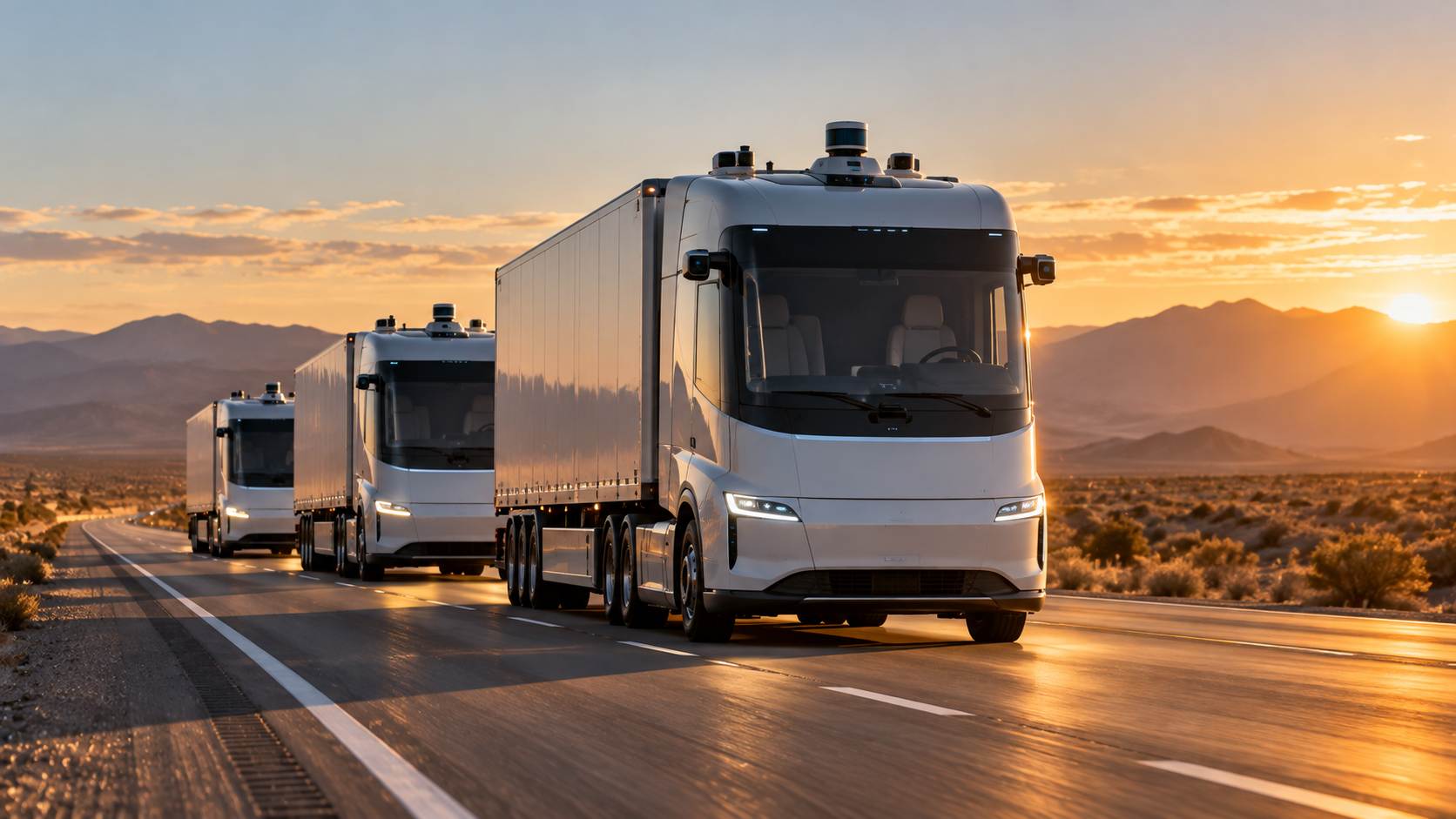
Today, Aurora, Kodiak, and Pony.ai conduct driverless freight runs between logistics hubs, mainly in Texas, with expansion expected in 2026–2027. Volvo plans to roll out hundreds of trucks designed for autonomous operation.
What the technology offers: near-round-the-clock operation, a response to driver shortages, and fuel savings through smoother driving and platooning.
Where it is being used first: on highway corridors between hubs, in mines, ports, and industrial sites—where routes are predictable.
According to the World Intellectual Property Organization (WIPO), the number of patent families related to platooning grew from fewer than 200 in 2014 to more than 1,000 in 2023.
2. Delivery Drones
Drones are taking on the “last mile”—delivering small parcels from a warehouse or store to the recipient. They typically carry loads of up to 2–2.5 kg over short distances. Amazon is developing its Prime Air service with the goal of making deliveries within 30 minutes, while in 2025, Canada's Volatus Aerospace received approval from Transport Canada to launch automated drone services.
What the technology offers: fast delivery of small and urgent shipments, access to areas with difficult road networks, and lower last-mile costs.
Urban air mobility is advancing in parallel, with electric vertical-takeoff aircraft that will be able to carry both people and cargo. According to WIPO, the number of patent families in this field grew from 67 in 2014 to nearly 400 in 2023, and rules governing crewed vertical-takeoff aircraft have been in force in the EU since May 2025.
3. Uncrewed Vessels and Smart Ports
The Yara Birkeland, a small electric autonomous vessel, is operating in Norway. Uncrewed barges are being tested in European coastal waters and inland waterways, often controlled by operators at shore-based centers.
Ports are also becoming automated: Shanghai, Busan, Rotterdam, and Hamburg are introducing automated loading and unloading of vessels. According to WIPO, the number of patent families related to smart ports grew from 20 in 2016 to more than 100 in 2023.
4. AI and Digital Logistics Platforms
Digitalization is seeing the fastest adoption. Artificial intelligence optimizes routes, predicts demand and breakdowns, and matches carriers with freight. Here are a few examples:
- UPS's ORION route-optimization system saves about 10 million gallons of fuel and reduces mileage by 85 million miles each year, according to the company;
- predictive maintenance based on IoT sensors can reduce vehicle downtime by up to 30%;
- the Uber Freight and C.H. Robinson digital platforms automatically match carriers with loads.
What the technology offers: supply-chain visibility, fewer empty runs and less downtime, and more accurate planning.
5. Electrification and New Batteries
Electric vans and trucks are already being used for urban and regional deliveries. The International Energy Agency expects electric vehicles to account for more than 40% of sales by 2030.
Batteries and electric motors play a key role here. According to WIPO, the number of patent families related to solid-state batteries grew from approximately 290 in 2010 to more than 2,000 in 2023. Electric drivetrain efficiency directly affects range and transportation costs.
6. Modern Cargo Airships
Lighter-than-air aircraft represent a distinct field. Modern airships use nonflammable helium, advanced envelope materials, digital control systems, and electric and hybrid powertrains; they can also operate without a crew.
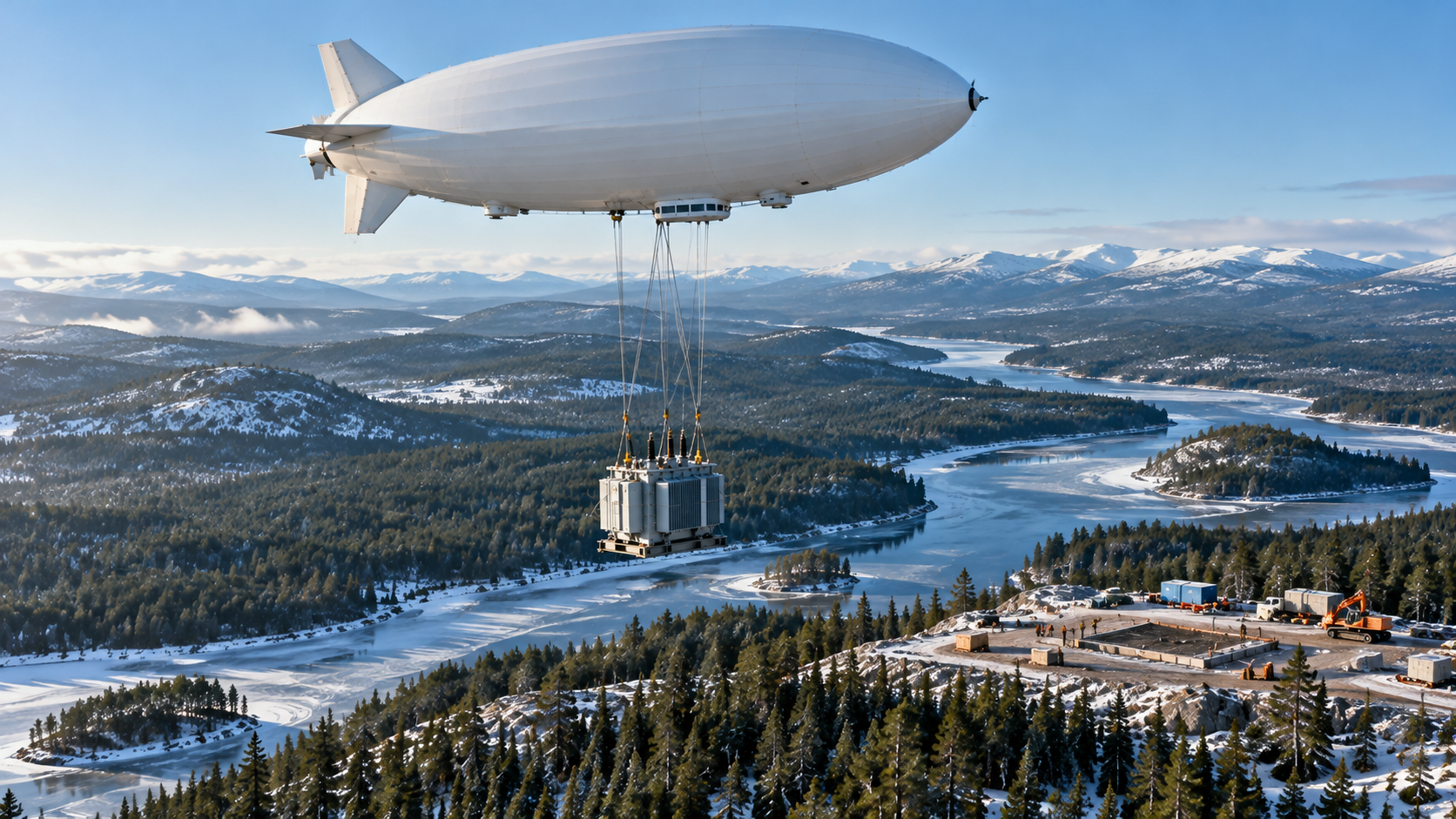
Their main advantage is the point-to-point delivery of large, heavy loads without roads, airfields, or runways. This opens up applications for which conventional transport offers no cost-effective solution:
- delivering heavy and oversized equipment to remote sites;
- supplying mining, energy, and oil and gas sites;
- transporting wind turbine blades, structural components, and modules;
- supplying northern and hard-to-reach communities;
- emergency and humanitarian deliveries;
- monitoring long stretches of infrastructure.
Companies in several countries are pursuing this field: in France, Flying Whales is developing the LCA60T cargo airship with a payload capacity of 60 tonnes; in the United Kingdom, Hybrid Air Vehicles has begun type certification of the hybrid Airlander 10; and in the United States, LTA Research is building its Pathfinder series of airships.
The New Generation Airships Project
New Generation Airships is an AERONOVA project to develop, manufacture, and commercially operate innovative airships. It is being developed with the support of SOLARGROUP, an international IT platform that facilitates investment.
Progress to date:
- experimental aircraft have been assembled and tested: the uncrewed NOVA-01 platform and the hybrid AEROLЁT-01. Following the tests, AEROLЁT-01 was moved to the airfield in Kirzhach, where restoration and design refinements are underway;
- the company launched in-house envelope production, and on August 19, 2026, it completed the envelope for the full-scale NOVA-2, with a volume of 2,000 m³;
- on September 1, 2026, the envelope was filled with air for the first time, and the first strength-test cycle was successfully completed; the envelope later underwent an overpressure test, while the ballonet was tested for leaks;
- AERONOVA moved on to final assembly of NOVA-2.
The first to take to the air will be NOVA-2E —an uncrewed electric cargo version with a volume of 2,000 m³ and a stated payload capacity of 0.5 t. Two ULPower helicopter engines have been acquired for the crewed NOVA-2 version, designed for one pilot and five passengers. The next production model, NOVA-8, is at the detailed design stage; manufacturing is scheduled to begin in 2027. The project roadmap calls for serial production of NOVA-8, followed by serial production of the larger NOVA-35.
Another area is stratospheric technology. The team has tested controlled payload-return technology: after completing its mission, a lightweight glider separates from the stratospheric balloon and returns the equipment to the launch area or a designated recovery point.
Technology Comparison
| Technology | Stage of Development | Where It Is Used | Main Benefit |
|---|---|---|---|
| Autonomous trucks | Initial commercial operations | Highways between hubs, mines, ports | Round-the-clock operation, addressing driver shortages |
| Delivery drones | Pilot and commercial services | “Last mile,” urgent parcels | Fast delivery of small loads |
| Uncrewed vessels and smart ports | Testing and deployment | Ports, coastal and river routes | Automation of loading and transport |
| AI and digital platforms | Widespread adoption | The entire supply chain | Fuel savings, less downtime |
| Electrification | Scaling up | Urban and regional delivery | Lower emissions and energy costs |
| Cargo airships | Testing and construction of the first full-scale aircraft | Remote sites, heavy and oversized loads | Delivery without roads or airfields |
How the Technologies Complement One Another
New technologies do not compete with one another; they address different parts of the logistics chain:
- long-haul routes — autonomous and electric trucks, automated ports;
- the urban “last mile” — drones, electric vans, and delivery robots;
- remote areas and heavy loads — cargo airships;
- management of the entire chain — AI, IoT, and digital platforms.
The logistics of the future will be a multimodal system in which the optimal mode of transport is selected for each load and route, while a digital platform connects them into a single chain.
Frequently Asked Questions
When will autonomous trucks become mainstream? Commercial driverless operations are already underway on dedicated routes in the United States. Expansion is expected in 2026–2027, primarily on highway corridors between hubs.
What cargo will drones deliver? Mainly small parcels over short distances: online purchases, medicines, and urgent spare parts.
Why are cargo airships needed when airplanes and helicopters already exist? An airship can deliver a large, heavy load from point to point without an airfield or a road. For remote sites, this removes the need to build temporary infrastructure.
What stage has the New Generation Airships project reached? The experimental NOVA-01 and AEROLЁT-01 aircraft have been assembled and tested, the envelope for the full-scale NOVA-2 has been manufactured and tested, and final assembly of NOVA-2 is underway. The uncrewed NOVA-2E cargo version will be the first to fly. On September 2, 2026, the project moved to funding stage 4.
Which technology will have the greatest impact on freight transportation? Their combination will have the greatest effect: digital platforms will unite autonomous ground transport, drones, and new types of air transport into a single system.
Conclusion
Freight transportation is changing before our eyes. Autonomous trucks are moving onto commercial routes, drones are taking on the “last mile,” ports are becoming automated, and AI is managing the entire supply chain. Modern cargo airships occupy a distinct niche: they make it possible to deliver heavy loads to places without roads or airfields.
AERONOVA's New Generation Airships project is advancing this field: experimental aircraft have been assembled and tested, in-house envelope production has been launched, final assembly of NOVA-2 is underway, and the NOVA-2E cargo version and production models lie ahead.
This material is for informational purposes only and does not constitute personalized investment advice. Crowdinvesting involves risk: the financial outcome depends on project implementation, the development of production, sales, and subsequent corporate transformation.
You can learn more about the New Generation Airships project and the current terms of participation in your account: SOLARGROUP — registration and project selection .