


Investing in Vietnam’s Technology and Logistics: Which Sectors Could Benefit from the Next Phase of Industrial Growth

In one sentence: Vietnam has already become one of Asia’s leading manufacturing hubs, and the next phase of its growth will be shaped by infrastructure, energy, and logistics—the very sectors where new opportunities for technology investment are emerging.
Introduction
As recently as the late 2000s, Vietnam was seen as a low-cost assembly location. Today, it is one of the world’s fastest-growing economies and a vital link in global supply chains. Samsung, Intel, LG, Foxconn, and other global manufacturers have established major production operations in the country, while the government has consistently invested in roads, ports, energy, and industrial parks.
Industry experts agree that Vietnam’s next phase of growth will depend less on new factories than on how quickly the country can build out the logistics networks, power system, and infrastructure around them. Let us examine the figures behind this transformation and the sectors that stand to benefit.
Vietnam in Numbers
- GDP growth: 8.02% in 2025 and 8.18% in the first half of 2026.
- Industrial growth: 8.8% in 2025 and 9.86% in the first half of 2026.
- Forecasts for 2026: The Asian Development Bank expects growth of about 7.2%, while the World Bank forecasts around 6.3%. These are among the highest rates in the Asia-Pacific region.
- Foreign direct investment: In 2025, registered FDI totaled $38.42 billion and disbursed FDI reached $27.62 billion, a five-year high. In the first half of 2026, registered FDI reached $34.65 billion.
- Industrial parks: The country has 478 industrial parks, 324 of which are operational, with an average occupancy rate of about 79%. In the second quarter of 2026, occupancy in ready-built factory space was about 86% in the north and 92% in the south.
Industrial Growth Corridors
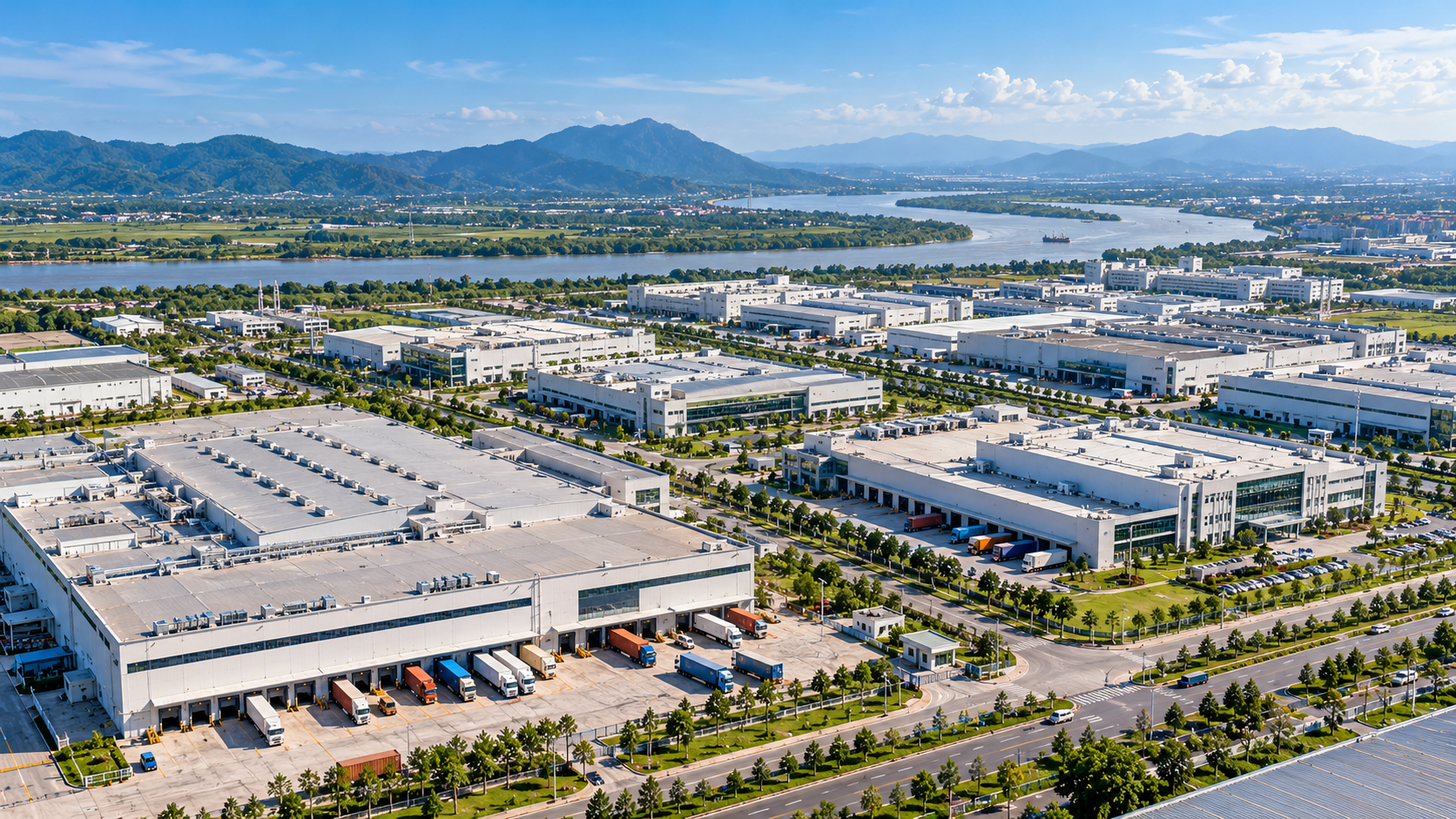
Vietnam’s infrastructure is developing around several strategic corridors.
North: Hanoi — Hai Phong — Quang Ninh. The main hub for electronics and high-tech manufacturing. The Lach Huyen deep-water port is being expanded, and industrial clusters are growing in Bac Ninh, Hai Phong, and Quang Ninh. Hai Phong alone, following its merger with Hai Duong Province, has 46 industrial parks in operation.
South: Ho Chi Minh City — Dong Nai — Ba Ria–Vung Tau. The country’s main logistics hub. Long Thanh International Airport is under construction, the Cai Mep–Thi Vai deep-water port complex is operational, and industrial parks are expanding rapidly.
Central Vietnam: Da Nang — Chu Lai. A growing industrial corridor. Covering more than 27,000 ha, the Chu Lai Open Economic Zone brings together automotive and mechanical engineering manufacturing, electronics, and logistics.
National spine. The North–South Expressway is taking shape as the country’s logistics backbone, connecting its largest cities, industrial zones, and ports.
Nationwide Infrastructure Projects
Vietnam is moving from isolated improvements to systematic infrastructure expansion:
| Project | Focus | Estimated investment |
|---|---|---|
| North–South high-speed railway | Railways | approximately $67 billion |
| Red River Corridor | Transport and logistics | approximately $40 billion |
| LNG terminal in Hai Phong | Energy | approximately $7.7 billion |
At the same time, highways, ports, airports, power lines, and digital infrastructure for data centers and high-tech manufacturing are under construction.
Why Logistics Will Define the Next Phase of Growth
Global supply chains are being reconfigured. Companies no longer focus solely on the lowest cost: they are diversifying production across countries, increasing inventories, improving supply chain transparency, and raising sustainability requirements. Vietnam is one of the main beneficiaries of this “China Plus One” strategy.
But factories alone are not enough for the next step. When choosing a country for investment, international companies increasingly assess transport reliability, warehouse capacity, customs clearance speed, and overall logistics performance. Logistics is evolving from a support function into a national competitive advantage.
Which Sectors Stand to Benefit Most
1. Electronics and Semiconductors
The core of Vietnam’s exports. The government supports the shift toward higher-value stages of production, including semiconductors, digital manufacturing, and automation. The 2025 Investment Law prioritizes high-tech and innovation projects.
2. Automotive Manufacturing and Electric Vehicles
Vietnam is expanding its production of automotive components and electric vehicles. The sector’s growth is driving demand for electric motors, batteries, charging infrastructure, and new drive technologies.
3. Energy
Rapid industrial growth requires new generation capacity and power grids. Renewable energy, LNG terminals, and power lines are among the main areas of investment. New rules allowing industrial parks, data centers, and charging infrastructure to purchase electricity directly support this trend.
4. Contract Logistics and Warehousing
Electronics, pharmaceuticals, and high-tech manufacturing require specialized logistics: security, traceability, temperature control, and hazardous-goods handling. Demand is growing for modern warehouses, cold chains, and chemical storage. Ready-built warehouses in the south of the country lease for an average of about $5 per m² per month.
5. Project Cargo and Heavy-Haul Transport
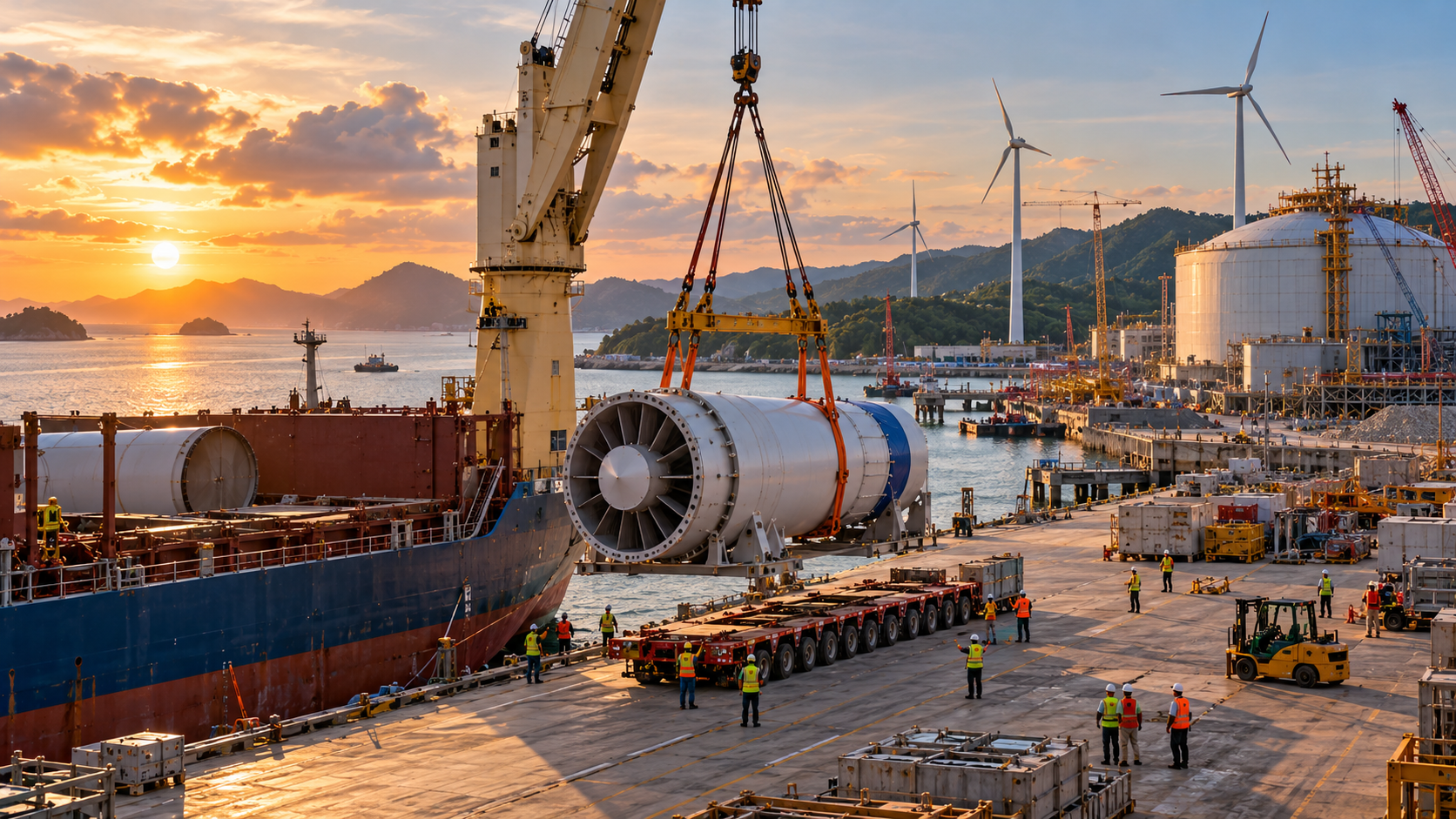
The construction of power plants, LNG terminals, power lines, ports, airports, and factories is creating a multiyear flow of heavy and oversized cargo. Market participants estimate that renewable energy, LNG, petrochemicals, semiconductors, and major industrial projects will generate the greatest demand for heavy-haul logistics over the next decade. Transporting oversized cargo still requires considerable time for route surveys, bridge assessments, and permits.
6. Digital Economy and Data Centers
E-commerce, fintech, and digital services are growing alongside the middle class and urbanization. Data centers and digital platforms need reliable power and connectivity.
7. Industrial Real Estate
High occupancy in industrial parks and ready-built factories is supporting demand for new space. Industrial parks are evolving from simple land providers into ecosystems with logistics, utility infrastructure, and access to suppliers.
| Sector | Demand driver | Link to logistics |
|---|---|---|
| Electronics and semiconductors | Manufacturing relocation to Southeast Asia | High-value cargo, traceability |
| Automotive and electric vehicles | Growth in production and domestic demand | Components, batteries, finished products |
| Energy | Rising industrial power consumption | Heavy and oversized equipment |
| Contract logistics | Supply chain diversification | Warehouses, cold chains, customs clearance |
| Project cargo transport | Infrastructure construction | Transformers, turbines, modules |
| Data centers | Digital economy | Power and equipment |
Where New Transportation Technologies Fit
Vietnam’s industrial growth is creating demand not only for conventional freight transport, but also for technologies that solve complex logistics challenges:
- transport electrification and efficient electric motors — for urban deliveries, industrial equipment, and electric vehicles;
- digital platforms and AI — for supply chain and warehouse management;
- new modes of heavy-cargo transport — for delivering large equipment to energy and industrial construction sites, to mountainous areas in the north, and to regions with limited road networks.
Cargo airships fall into the last category. Their advantage is “point-to-point” delivery of heavy and oversized cargo without roads or runways. This is especially relevant for a country where project cargo volumes are growing while road infrastructure is still catching up with industrial growth.
The New Generation Airships Project
New Generation Airships is a project to develop, manufacture, and commercially operate innovative airships, implemented by AERONOVA. The project is being developed with the support of SOLARGROUP, an international IT platform that facilitates investment.
Progress to date:
- experimental craft have been assembled and tested—the NOVA-01 unmanned platform and the hybrid AEROLЁT-01;
- the company launched in-house envelope production, and on August 19, 2026, it completed manufacturing the 2,000 m³ envelope for the full-scale NOVA-2;
- on September 1, 2026, the envelope successfully completed its first cycle of strength testing; it later underwent an elevated-pressure test, and the ballonnet underwent a leak-tightness test;
- AERONOVA is preparing the NOVA-2 systems for transfer from the test stand to the full-scale envelope, followed by phased assembly.
The first to take flight will be the unmanned electric cargo version, NOVA-2E, with a stated payload capacity of 0.5 t. The next production model will be the NOVA-8, and the project roadmap calls for a transition to series production of the largest airship in the range, the NOVA-35. On September 2, 2026, the project advanced to Stage 4 of funding.
How Investors Can Take Part in the Growth of Technology and Logistics
| Method | What it offers | Key considerations |
|---|---|---|
| Shares in Vietnamese companies and funds | Exposure to Vietnam’s economy | Market volatility, currency risk |
| Industrial and warehouse real estate | Rental income | High entry threshold |
| Direct business investment | Participation in a specific manufacturing or logistics business | Requires expertise and capital |
| Crowdinvesting in international technology projects | Participation in developing a new technology from an early stage | Long time horizon; accessible entry point |
For individual investors from Vietnam and other countries, crowdinvesting is one accessible way to participate in the development of new transportation technologies. Participation in the New Generation Airships project is arranged through a SOLARGROUP personal account; packages and their face values may change from stage to stage, and current face values are shown on the purchase page in the personal account. For more on the rules for participating from Vietnam, see the article “How to Invest in International Startups and Technology Projects from Vietnam.”
Frequently Asked Questions
Why does Vietnam attract investors? High economic growth (8.02% in 2025), steady inflows of foreign investment, a favorable location at the heart of Southeast Asia, a young workforce, a network of free trade agreements, and large-scale infrastructure programs.
Which sectors in Vietnam are growing fastest? Electronics and semiconductors, automotive manufacturing and electric vehicles, energy, logistics and warehouse real estate, and the digital economy.
Why is logistics so important to Vietnam? When selecting a location, international companies increasingly assess transport reliability, warehousing, customs, and logistics infrastructure. Without advanced logistics, manufacturing growth slows.
Where in Vietnam are project and heavy cargo volumes highest? At construction sites for energy projects (renewable energy, LNG, and power lines), petrochemical facilities, ports, airports, and major factories—across the northern, southern, and central industrial corridors.
How can an investor from Vietnam participate in the New Generation Airships project? Through a SOLARGROUP personal account. The project is at Stage 4 of funding; current participation terms are available in the personal account.
Conclusion
Vietnam is entering a new phase of industrial development, moving from assembly-based manufacturing toward an advanced economy with modern infrastructure, energy, and logistics. Electronics, energy, contract logistics, industrial real estate, and project cargo transport stand to benefit most from this transition.
The growing flow of heavy and oversized cargo is also opening a niche for new transportation technologies. AERONOVA’s New Generation Airships project is developing one of them: in-house envelope production has been launched, the NOVA-2 systems are being prepared for transfer to the full-scale envelope, and the cargo-carrying NOVA-2E and production models lie ahead.
This material is for informational purposes only and does not constitute personalized investment advice. Crowdinvesting involves risk: the financial outcome depends on project execution, production development, sales, and the company’s subsequent corporate transformation.
Learn about the New Generation Airships project and current participation terms in your personal account: SOLARGROUP — registration and project selection.