


Deep Tech investment in India in 2026: how to assess projects

Deep Tech investment in India: why capital is flowing into future technologies and how individual investors can assess such projects
India is known for its IT services, but the next stage of its technological development is not limited to software. Semiconductors, space systems, robotics, advanced materials, and transport technologies require laboratories, testing, and capital-intensive manufacturing. These fields fall under the umbrella of Deep Tech. They give investors access to potentially large markets but require a different approach to risk, timelines, and the validation of results.
This article examines why Deep Tech has become an important part of India’s investment agenda in 2026, how financing works, how an engineering startup differs from a digital one, and what questions to ask before investing. As a practical example, we will look at New Generation Airships, a project that SOLARGROUP helps finance through collective investment.
What is Deep Tech, and why is it different from a conventional technology startup?
Deep Tech refers to companies whose core advantage is based on a scientific discovery, complex engineering, intellectual property, or a technological process that is difficult to replicate. It does not necessarily mean an artificial intelligence company: a Deep Tech company may develop materials, engines, diagnostic systems, industrial automation, or new aircraft.
In a conventional digital business, the first version of a product can often be released within months, demand can be tested, and the interface can be changed quickly. Validating a new aircraft or semiconductor process requires test rigs, materials, a skilled team, and trials. Even a successful prototype does not mean that the technology is ready for mass production.
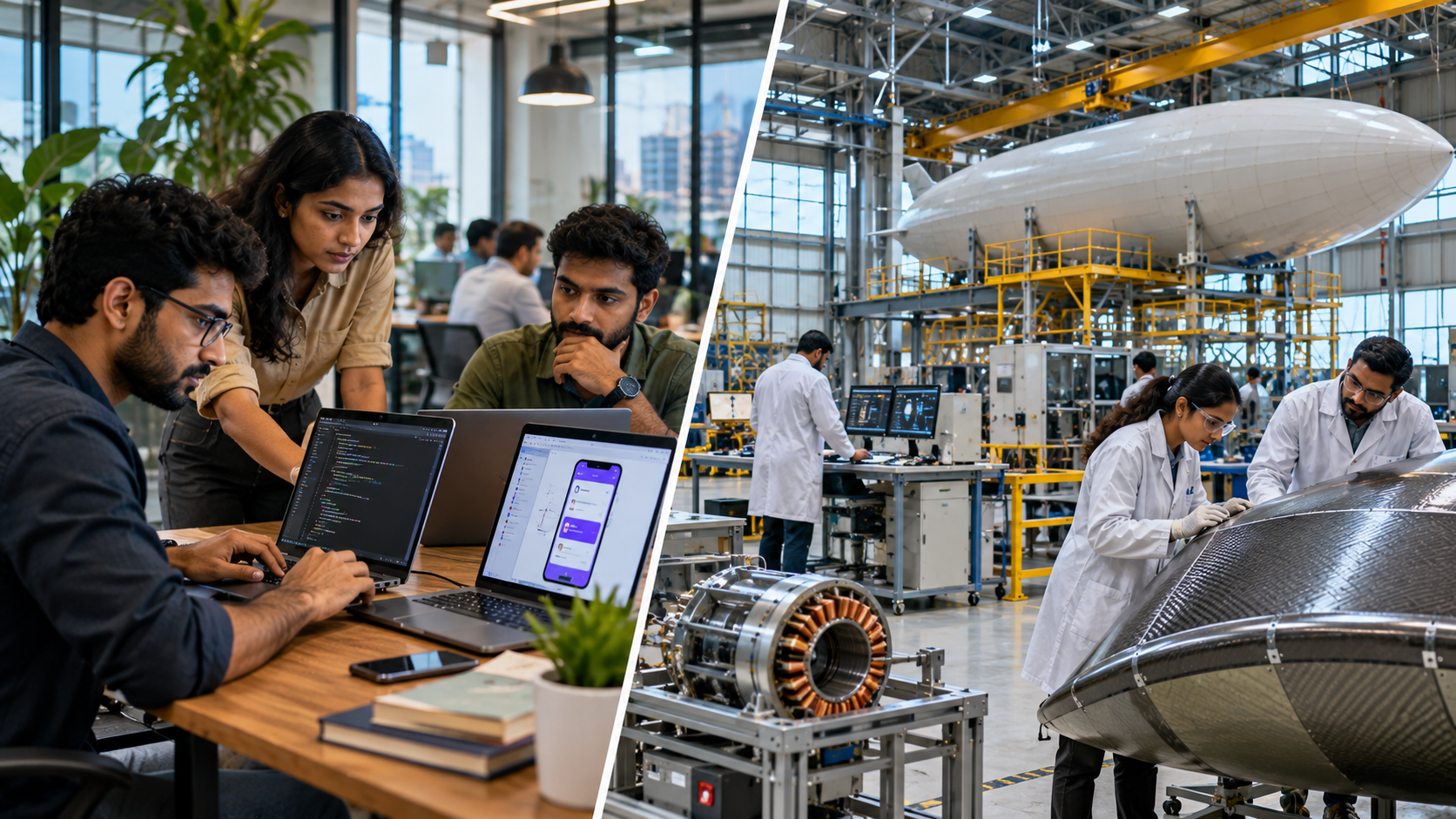
| Criterion | Digital startup | Deep Tech project |
| Source of competitive advantage | Product, data, distribution | Engineering, patents, know-how, testing |
| Initial outcome | Application, users, revenue | Laboratory validation, prototype |
| Main risks | Demand, competition, monetization | Technology, manufacturing, certification, and demand |
| Scaling | Often software-based | Often requires a factory, supply chain, and capital |
| Investment horizon | Varies by business | Often long, with multiple funding rounds |
Why interest in Deep Tech is growing in India in 2026
Indian capital is increasingly looking at sectors where domestic research, industrial self-reliance, and exportable technologies matter. CFA Institute reported that by July 2025, Indian Deep Tech companies had raised about $1.06 billion in equity funding across 137 rounds—roughly twice as much as during the same period in 2024. This figure reflects a specific period and methodology; it does not guarantee sustained growth every year.
In 2026, the government announced the launch of Startup India Fund of Funds 2.0 with a corpus of ₹10,000 crore. The funds are expected to be channelled through eligible AIFs, with Deep Tech, early-stage ventures, and innovative manufacturing among the priorities. Another program, the Research, Development and Innovation (RDI) Scheme, has an announced outlay of ₹1 lakh crore over six years and is intended to support complex research and its commercialization.
Government support for a sector should not be confused with endorsement of a particular deal. Neither these Indian programs nor the growth in venture funding proves the quality of any individual overseas project. For an individual investor, this is context, not investment advice.
Where capital is flowing: India’s key Deep Tech sectors
Semiconductors, electronics, and advanced materials
Chips and advanced materials underpin computing, industry, and energy. Capital expenditure, technological processes, patent protection, and access to manufacturing partners are especially important in this field. Investors assess not only demand but also production yield, unit cost, and the ability to manufacture consistently.
Space technology and aerospace engineering
Satellite platforms, rocket components, navigation systems, and new aircraft require lengthy development and often involve aviation or space regulators. A useful question is which tests have already been completed and what still stands between the prototype and commercial use.
Robotics, autonomous systems, and industrial AI
The potential lies at the intersection of algorithms, sensors, mechanics, and real-world manufacturing needs. For assessment, the key indicators of performance in the customer's operating environment are accuracy, fault tolerance, maintenance costs, and the ability to integrate with existing processes.
Biotechnology, climate, and energy solutions
In these sectors, outcomes depend on experimental validation, approvals, and the economics of implementation. Even a promising laboratory solution may prove too expensive or complex for widespread use.
How individual investors can gain access to Deep Tech
There are several routes: listed shares of mature technology companies and thematic funds; regulated Indian AIFs; venture capital funds and syndicates for eligible investors; direct private deals; and collective financing of individual projects. They differ in the legal form of the asset, minimum investment, liquidity, risk, and investor eligibility requirements.
AIFs should not be presented as a mass-market instrument with a small ticket size: the standard minimum investment in an Indian AIF is generally ₹1 crore, subject to certain exceptions. A low entry threshold on a foreign online platform likewise does not mean that its investment instrument is permitted for a particular Indian resident.
Indian residents use mechanisms permitted under the rules to transfer money abroad, including the Liberalised Remittance Scheme (LRS), but LRS is not a blanket authorization to purchase any foreign equity interest or investment right. The legal classification of the asset must comply with current FEMA and Overseas Investment rules. Before making a payment, investors must establish exactly what they are acquiring, who the counterparty to the contract is, and how the bank will classify the transaction.
How to assess a Deep Tech project: 10 criteria for investors
| Criterion | What to check |
| 1. Problem and customer | Who pays for the solution and how costly the problem is today |
| 2. Technology | What is fundamentally new and whether it has been independently validated |
| 3. TRL | Whether the readiness level is supported by testing rather than a presentation |
| 4. Prototype | What has physically been built and tested |
| 5. Team | Experience of the engineers, manufacturing specialists, and executives |
| 6. IP | Patents, licenses, rights to the technology, and restrictions |
| 7. Manufacturing | Suppliers, equipment, unit cost, scalability |
| 8. Regulation | Certification, permits, realistic timelines |
| 9. Financing | Amount raised to date, use of funds, future rounds |
| 10. Investor rights | Legal nature of the asset, contract, stake, dilution, exit, and risks |
Technology readiness is often described using the TRL scale from 1 to 9. But a TRL number is no substitute for evidence: ask for test reports, demonstrations, data showing that the results can be reproduced, and a list of unresolved issues. An honest roadmap that identifies technical risks is more useful to an investor than a bold promise of imminent market leadership.
Why a working prototype does not yet mean a viable business
Different challenges stand between laboratory success and sustainable revenue: reproducing the result, demonstrating safety, reducing the unit cost, establishing supply chains, obtaining approvals, and finding customers. Each step may require additional funding, and timelines may change. In Deep Tech, investors should therefore assess not only the size of the future market but also the capital required to reach the next meaningful milestone.
It is useful to divide financing into verifiable stages: manufacturing → testing → refinement → certification → pilot customers → commercial production. Each stage needs a budget, a success criterion, and an explanation of what will happen if it is delayed.
An example of Deep Tech investment: the New Generation Airships project
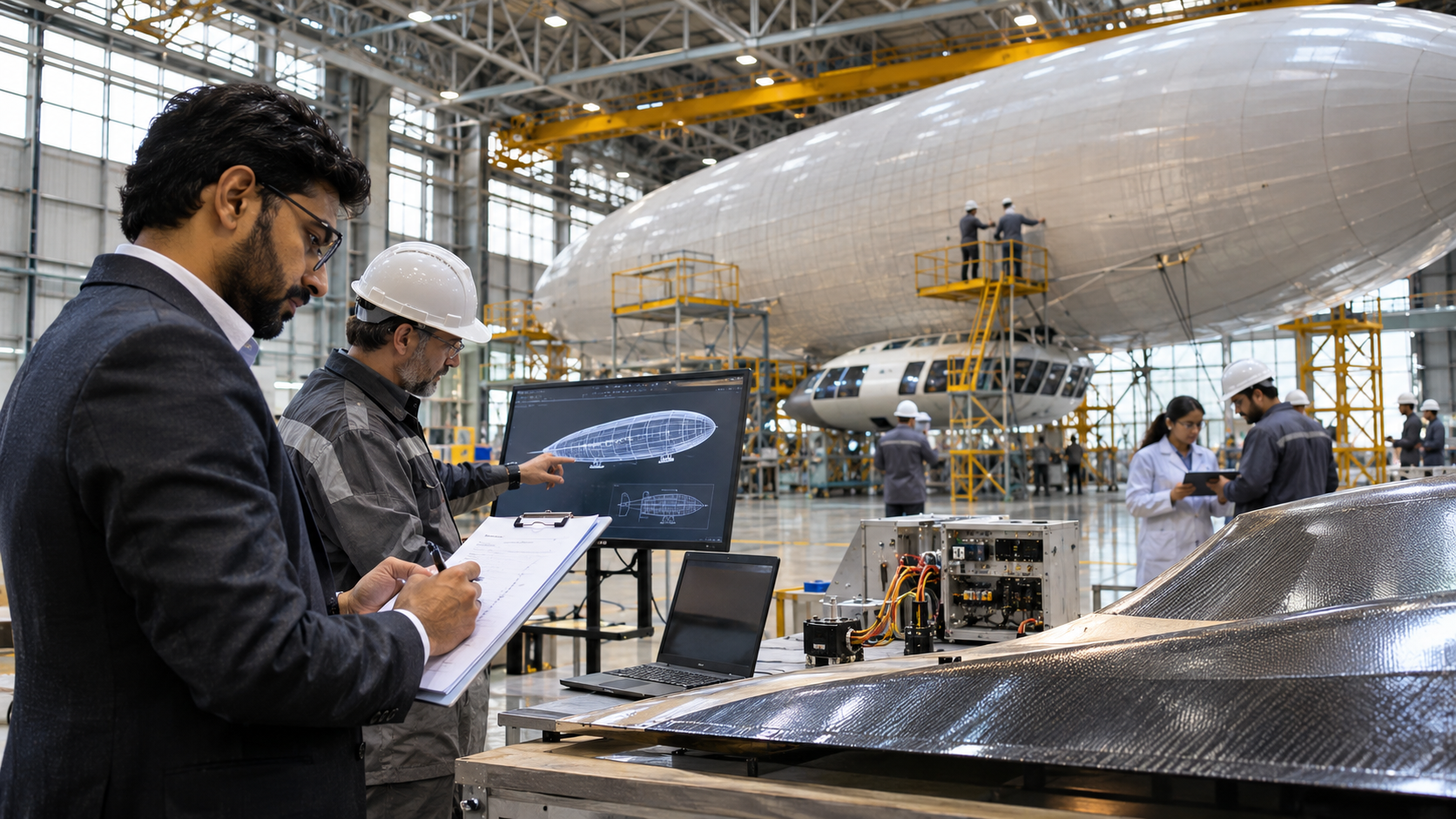
New Generation Airships is among the projects for which SOLARGROUP arranges financing. The engineering company AERONOVA is developing modern airships for transport and other industries. The concept relies on the physics of aerostatic lift: a gas lighter than air provides a significant share of the lift, while engines provide propulsion and control. Potential applications include serving routes with limited infrastructure, transporting heavy and oversized cargo, monitoring, and performing specialized tasks.
The project is important as an example of the transition from concept to engineering validation. The team reported flight tests of NOVA-01 and the hybrid AEROLЁT-01; the manufacture of the 2,000 m³ NOVA-2 envelope in August 2026; and work to prepare a site in Kirzhach for further assembly and testing. At the same time, NOVA-2 cannot yet be equated with a certified, series-produced commercial aircraft, while larger models remain development plans.
For a potential investor, the project offers both verifiable progress and significant uncertainties: further testing, certification, scaling up manufacturing, demand, future unit costs, and funding needs. SOLARGROUP provides information about the project, its stages, and the terms of participation, but investment in early-stage engineering development is not a bank deposit and does not offer a guaranteed return.
What to check before participating in the project from India
Start with the current investment documentation: which legal entity receives the funds; what instrument and rights the investor acquires today; whether a future exchange for shares is contemplated and on what terms; whether there are restrictions on transferring rights; and how disputes are handled. Then separately check how Indian rules apply to the specific transaction and which bank transfer method is permitted.
You should not assume that AERONOVA is subject to the terms of other SOLARGROUP projects or that registering on the platform automatically confirms that investing from India is lawful. The terms of the specific project and the legality of a cross-border investment require separate review.
Key risks and a reasonable investment horizon
A Deep Tech investor risks losing all invested capital. Outcomes can be affected by technological failures, design changes, certification delays, rising costs, insufficient demand, new rounds with potential dilution, and the absence of a secondary market. Even if the project achieves its commercial goals, this does not automatically result in dividends or the ability to sell the asset at the desired price.
A reasonable approach is to treat such a deal as a high-risk, long-term part of a portfolio, avoid using money needed for essential expenses, and not rely on a projected valuation as the guaranteed value of the stake.
Conclusion: how to turn an interest in future technologies into an informed decision
India is building a significant Deep Tech ecosystem, but the investor’s most important skill is distinguishing scientific and engineering potential from demonstrated commercial readiness. A robust case includes a working prototype, clear next tests, a transparent legal model, and realistic economics.
If you are interested in new transport technologies, explore the New Generation Airships project on the official SOLARGROUP page. Compare the latest technical news, roadmap, contract, and risks; before investing from India, also check how local rules apply to the instrument being offered.